

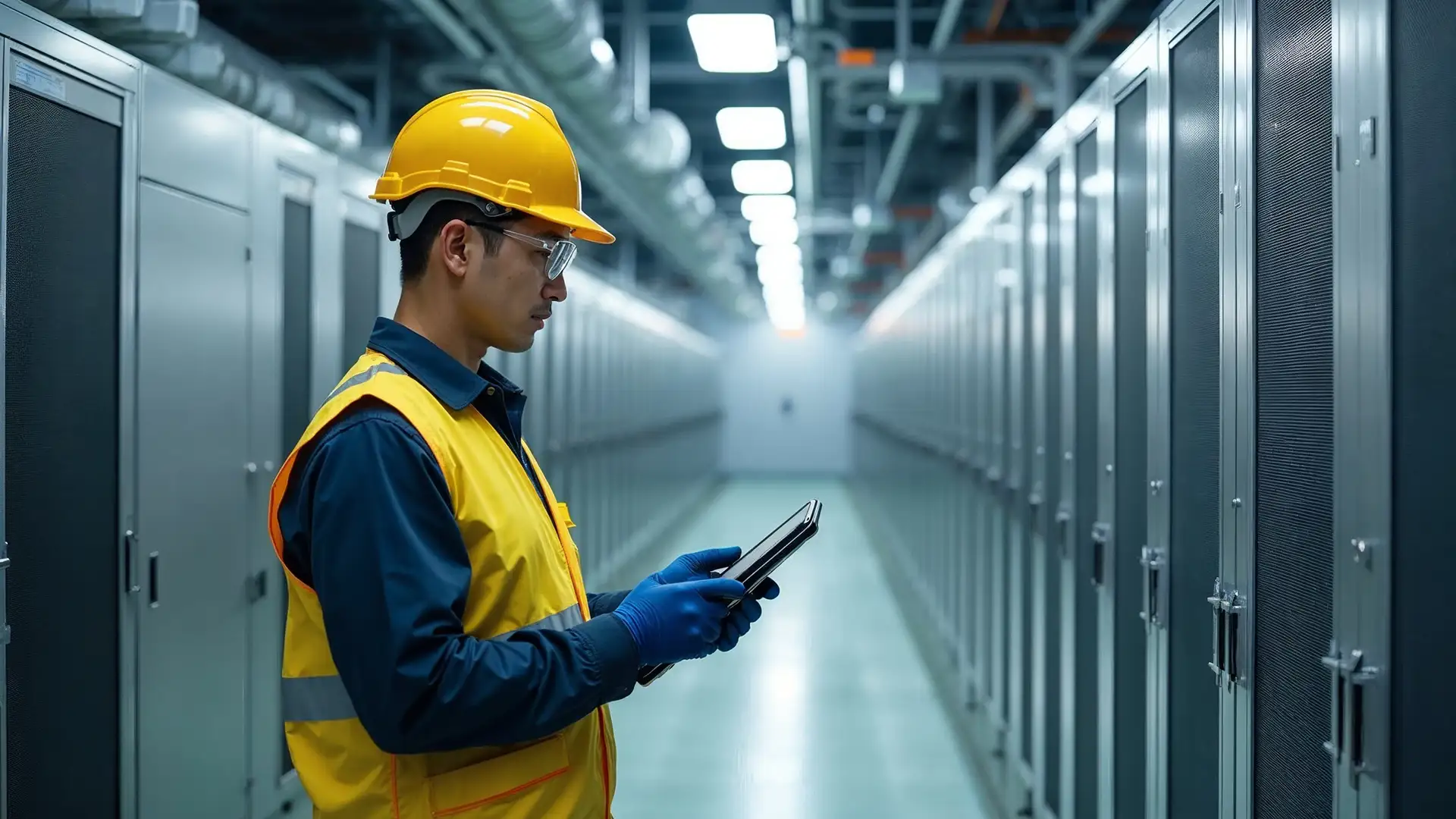
Why serviceability matters in critical infrastructure
When designing infrastructure for critical environments, from data centers to medical facilities, peak performance often takes center stage. Specs are reviewed, capacities calculated, and systems engineered for optimal uptime.
But what happens after go-live? That’s when maintainability becomes just as important as performance. Systems that are difficult to service don’t just cost more, they fail more.
Maintainability is cost efficiency
A system that’s hard to access is a system that’s hard to maintain. That leads to delayed servicing, longer downtimes, and in some cases, skipped checks that open the door to bigger failures.
We’ve seen it firsthand:
- Battery rooms with cramped layouts that prevent proper airflow during servicing
- Distribution boards mounted too high for safe inspection
- Fire suppression systems installed without clear testing access
Each of these issues creates unnecessary friction, not only for technicians but also for clients.
When design makes maintenance harder than it should be, your operational costs rise while reliability drops. That’s a risk few mission-critical environments can afford.
Don’t let maintenance be an afterthought
In fast-moving build schedules, it’s easy to focus on getting systems in place. But poor planning today becomes someone else’s headache tomorrow.
Common oversights include:
- Tight ceiling spaces with obstructed panels
- Unlabelled detection wiring that complicates testing and troubleshooting
- Service access routes that require shutting down nearby operations
For facilities that run 24/7 or serve public-facing operations, these small issues quickly snowball into major disruptions. Infrastructure should be built for the long haul, not just the handover.
How GreenBay designs with serviceability in mind
At GreenBay, we approach infrastructure design with the full lifecycle in mind. From day one, we consider:
- Ease of access for technicians and emergency responders
- Clear labelling and logical layouts for future servicing
- Modular and upgradeable designs that allow phased enhancements
- Built-in allowances for component wear, testing intervals, and scheduled downtime
We don’t just install systems. We help ensure they can be maintained efficiently, safely, and without unnecessary disruption for years to come.
As you plan for 2026, ask this question before finalising your infrastructure design, “Can this system be serviced without shutting down everything around it?” If the answer is no — it’s worth revisiting the plan. Let’s build environments that don’t just work, but keep working, with fewer disruptions and smarter support built in.

