

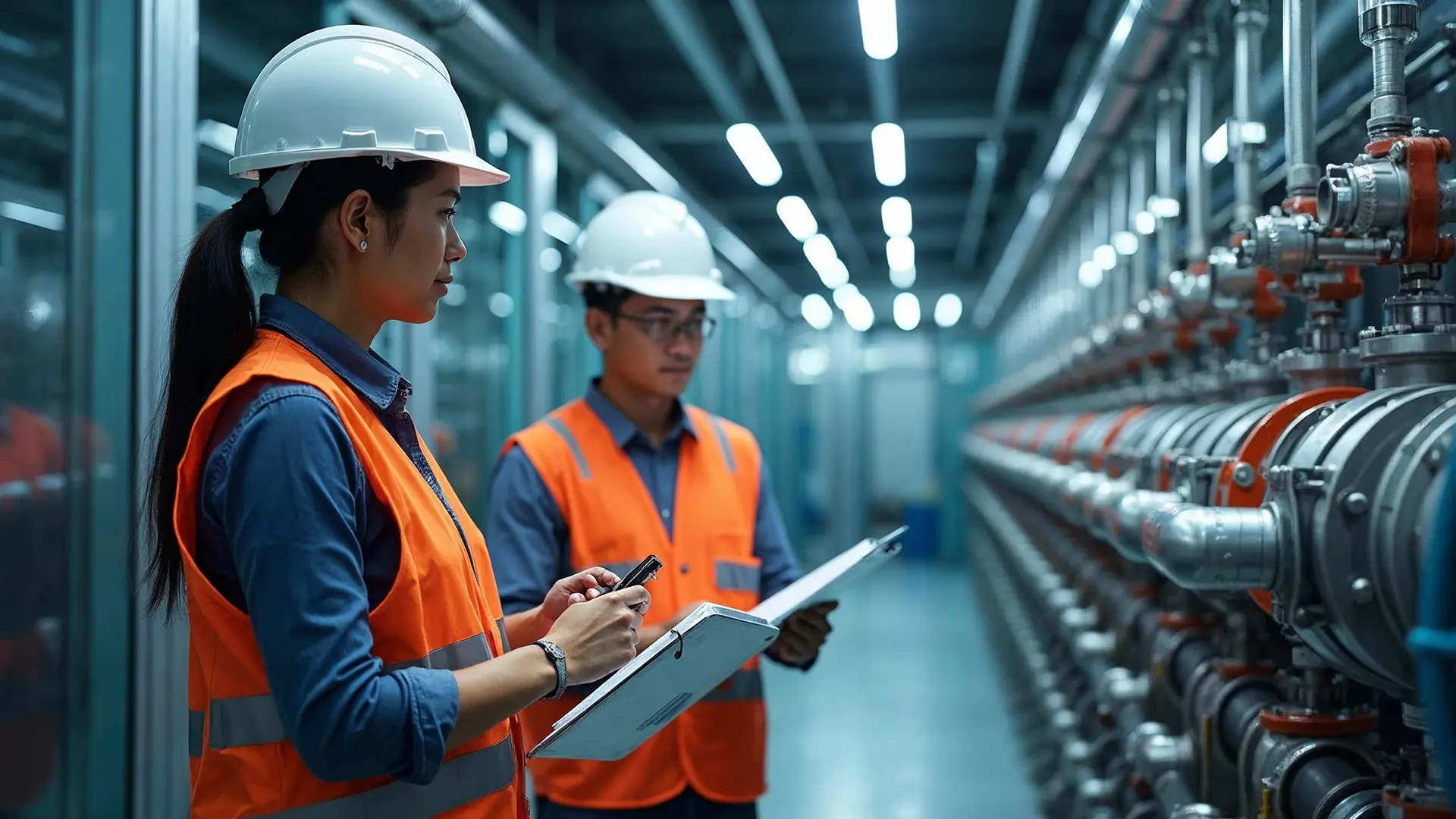
Critical infrastructure is often designed around capacity, efficiency and redundancy. But another question matters just as much: how will the systems be inspected, serviced and eventually replaced once the facility is operational?
Maintenance should not be treated as something that begins only after installation. Decisions made during design and system integration can determine whether future maintenance is straightforward or disruptive.
Equipment must be accessible
Even reliable equipment requires routine inspection and servicing. Technicians need sufficient space to reach components, open panels, conduct tests and remove parts safely.
When equipment is installed without considering access, even ordinary maintenance can become more difficult, time-consuming and potentially risky. Good infrastructure design considers not only where equipment fits, but how people will work around it throughout its service life.
Systems should be maintainable without unnecessary disruption
Critical facilities cannot always shut down whenever maintenance is required. Their infrastructure therefore needs to support planned servicing while essential operations continue.
Depending on the system and the facility’s requirements, this may involve redundancy, bypass arrangements, isolation points or modular equipment. These provisions allow individual components to be inspected or serviced while reducing the impact on the wider operation.
Redundancy alone is not enough. The system must also be designed so that each redundant path can be maintained safely and independently.
Monitoring helps maintenance become more proactive
Monitoring provides visibility into equipment performance and changing operating conditions. Data from UPS systems, energy monitoring, building management systems and environmental detection solutions can help facility teams recognise developing issues earlier.
This allows maintenance decisions to be informed by actual equipment condition and performance trends, rather than relying only on fixed schedules or waiting for an alarm or failure.
Documentation supports the people maintaining the system
Clear drawings, equipment records, labelling, operating procedures and maintenance histories are an important part of maintainable infrastructure.
As facilities change over time, accurate documentation helps technicians understand how systems are connected, identify the correct equipment and carry out work with greater confidence. Without it, even a well-installed system can become increasingly difficult to manage.
Good design considers the full operating life
A system should not only perform well on the day it is commissioned. It should remain practical to inspect, test, maintain and upgrade over many years of operation.
Designing with maintenance in mind can help facilities:
- Reduce the disruption caused by planned servicing
- Improve safety and accessibility for maintenance teams
- Identify developing equipment issues earlier
- Simplify future repairs, replacements and upgrades
- Support more reliable long-term operation
For critical infrastructure, maintainability is not an optional operational detail. It is one of the qualities that separates a system that merely works today from one that can continue supporting the facility over the long term.
At GreenBay, we consider how critical systems will be operated and maintained alongside how they will be designed and integrated, helping customers build infrastructure that remains dependable throughout its lifecycle.

