

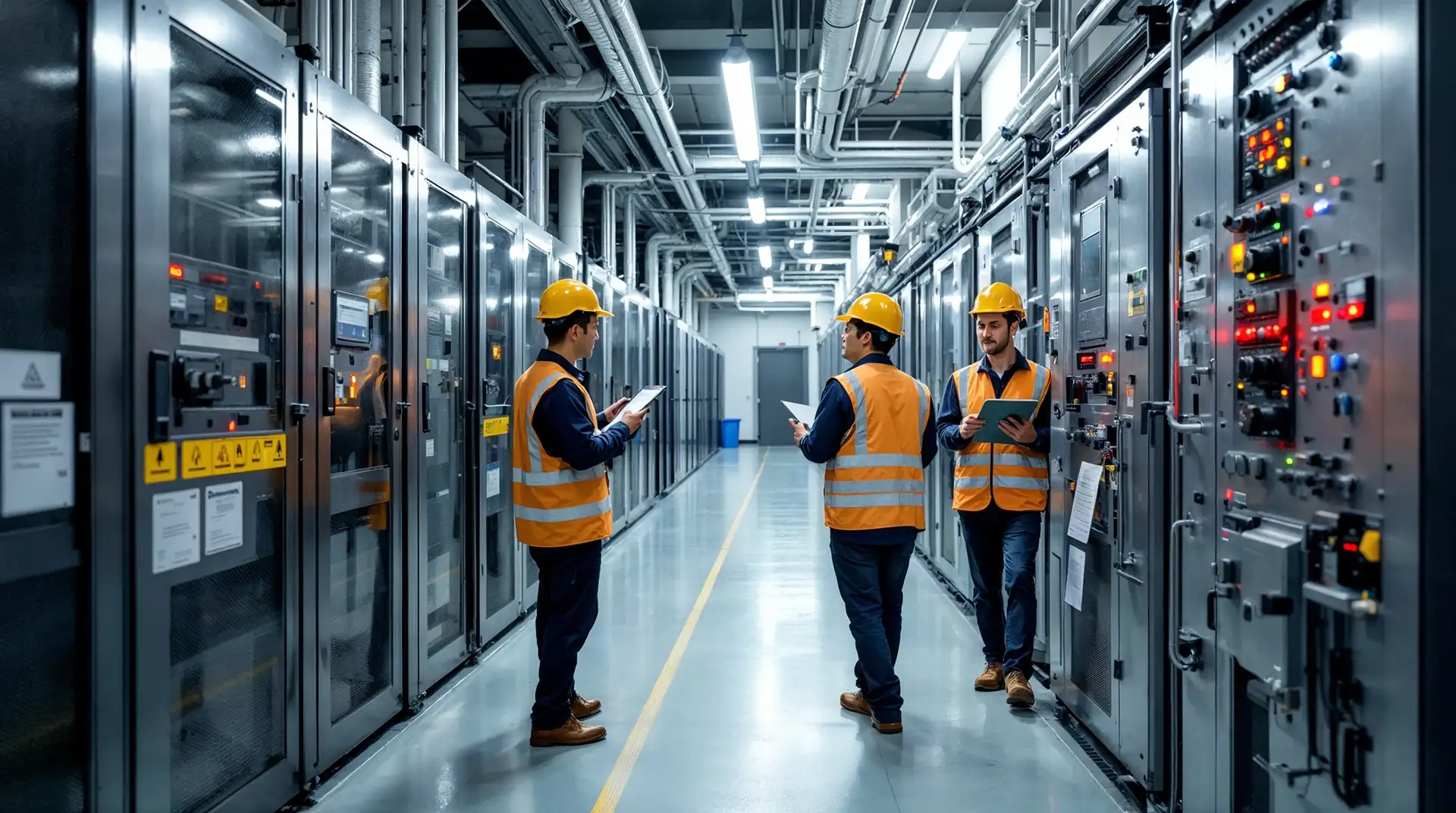
Compliance is essential in any critical facility. It sets the minimum standards for safety and ensures that systems are designed and operated within regulated requirements. Yet anyone who has spent time in the field knows that meeting compliance does not automatically make a facility resilient. True safety is achieved only when compliance is treated as the starting point, not the finish line.
In a world where facilities are becoming more complex and workloads more demanding, it is worth asking what separates a compliant facility from one that is genuinely safe.
1. Reliability is designed into the system, not assumed
A facility may comply with standards on paper, but resilience depends on how well the system is designed to respond to real scenarios. The difference lies in the details.
Examples include the quality of power distribution pathways, the effectiveness of redundancy strategies, and the real-time integration between fire detection, suppression, and monitoring infrastructure.
Compliance checks whether a system has the required components. Reliability asks whether these components work together under stress, during faults, or when conditions change.
2. Safety depends on maintenance culture, not certification
Most safety issues arise not because systems were designed incorrectly, but because they were not maintained consistently. A compliant facility can still be at risk if inspections are skipped, preventive maintenance is delayed, or testing routines are treated as a formality.
True safety is built on routine verification, accurate documentation, and a team that understands why each task matters. Maintenance culture is what keeps risk low long after the commissioning team has left the site.
3. Human readiness is as important as system readiness
Even the best engineered systems rely on people. A safe facility is supported by teams that know how to respond to abnormal conditions, understand escalation protocols, and can recognise early indicators of failure.
Training, observation, and experience all contribute to operational safety. Teams that communicate well and act early can prevent small issues from turning into major downtime events.
4. Integration across disciplines creates stronger protection
Power, safety, cooling, monitoring, and automation systems often operate in their own spheres, but in reality they are tightly interdependent.
A facility that is compliant in one discipline may still be vulnerable if other systems are not aligned. For example, cooling failures can trigger electrical faults, and electrical faults can compromise safety systems.
A truly safe facility recognises these relationships and designs for coordinated response rather than isolated compliance.
5. Continuous improvement matters more than one-time audits
Compliance audits happen periodically. Operational risks evolve daily. The safest facilities are the ones that review trends, identify weak points early, and update procedures based on new technology or field learnings.
This approach turns safety into an ongoing process rather than a checklist exercise. It keeps the organisation ready for new challenges, especially as industries move toward higher density workloads and more automated systems.
Closing Thought
Compliance creates a foundation for safety, but real resilience comes from the combination of good design, disciplined maintenance, trained people, and coordinated systems. Critical facilities remain safe not because the work was completed once, but because the work continues every day.