

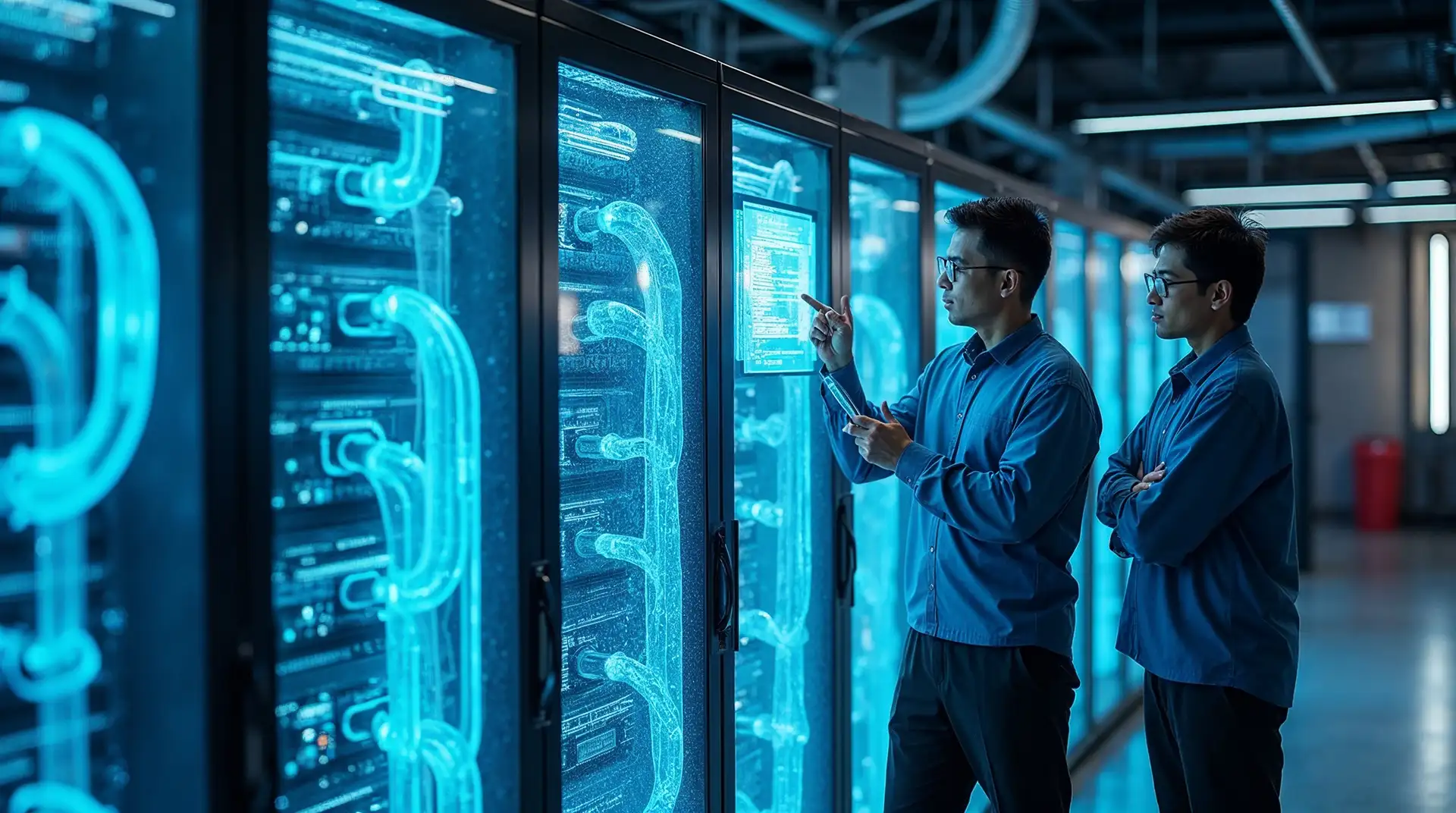
As data centers grow more powerful, they also grow hotter. Every new generation of processors pushes the limits of what traditional air-cooling systems can handle. The result: higher energy use, bigger footprints, and mounting pressure to find a smarter way to stay cool.
That’s where liquid cooling comes in. Once used only in high-performance computing, it’s now redefining how modern facilities manage heat, save energy, and plan for the future.
1. Why liquid cooling is taking center stage
Air cooling relies on moving large volumes of chilled air through racks and aisles. It works but it’s inefficient, especially in Malaysia’s tropical climate where cooling loads stay high year-round.
Liquid, however, conducts heat about 3,000 times better than air, allowing heat to be drawn directly from the source. That translates into lower energy use and a smaller carbon footprint — a clear win for both operational efficiency and sustainability.
Analysts now project the global liquid cooling market to triple by 2030, with Asia Pacific leading the adoption curve as new data centers prioritize efficiency and density over size.
2. Designed for high-density workloads
AI, cloud computing, and edge applications are pushing rack densities beyond what air systems can sustain. Liquid cooling supports these workloads by removing heat at the chip or rack level, keeping temperatures consistent even under heavy processing demand.
The result isn’t just better performance, it’s design flexibility. Facilities can pack more compute power into smaller spaces, reducing both physical and energy footprints while keeping reliability intact.
As one industry analysis notes, high-performance data centers using liquid cooling have seen up to 45% improvements in Power Usage Effectiveness (PUE) compared to traditional systems.
3. Efficiency that supports sustainability
Cooling can account for up to 40% of a data center’s total energy use. Liquid cooling helps cut that number significantly. Some systems even allow heat recovery, redirecting waste heat for building heating or industrial reuse, turning what was once lost energy into something useful.
Microsoft’s internal studies found that switching from air to liquid cooling could reduce greenhouse gas emissions by around 15% and water consumption by up to 50% across the data center lifecycle.
It’s an approach that aligns with Malaysia’s push toward greener infrastructure and reinforces how sustainability and performance can coexist.
4. A smarter path forward
For operators planning new facilities, integrating liquid cooling from the start offers long-term savings and scalability. For existing sites, hybrid options such as rear-door heat exchangers or partial liquid loops, make the transition easier without major redesigns.
The technology is also evolving fast. Microfluidic cooling, where coolant channels are embedded directly into chips, has shown efficiency gains up to three times higher than traditional cold plate systems. This innovation could soon define the next phase of cooling efficiency.
At GreenBay, we view liquid cooling as more than a technical upgrade. It’s a step toward future-ready infrastructure, one built on efficiency, adaptability, and sustainability.
Closing thought
As digital demand accelerates, the question isn’t if liquid cooling will become the standard, it’s when. The technology is here, proven, and ready to shape the next generation of data centers across Malaysia and beyond.
Sources:
Datacenter Knowledge – Sustainable Data Center Cooling Trends for AI Workloads (2025)
Grand View Research – Data Center Liquid Cooling Market Report (2025)
Mordor Intelligence – Malaysia Data Center Cooling Market Forecast (2025–2031)
Reuters – Corintis Raises USD 24 Million for Microfluidic Cooling Technology (Sept 2025)